
Why Living Room Floating Shelves Belong in Every Home
Living room floating shelves are wall-mounted shelves with hidden brackets that create a clean, minimal look — as if the shelf is simply floating on the wall.
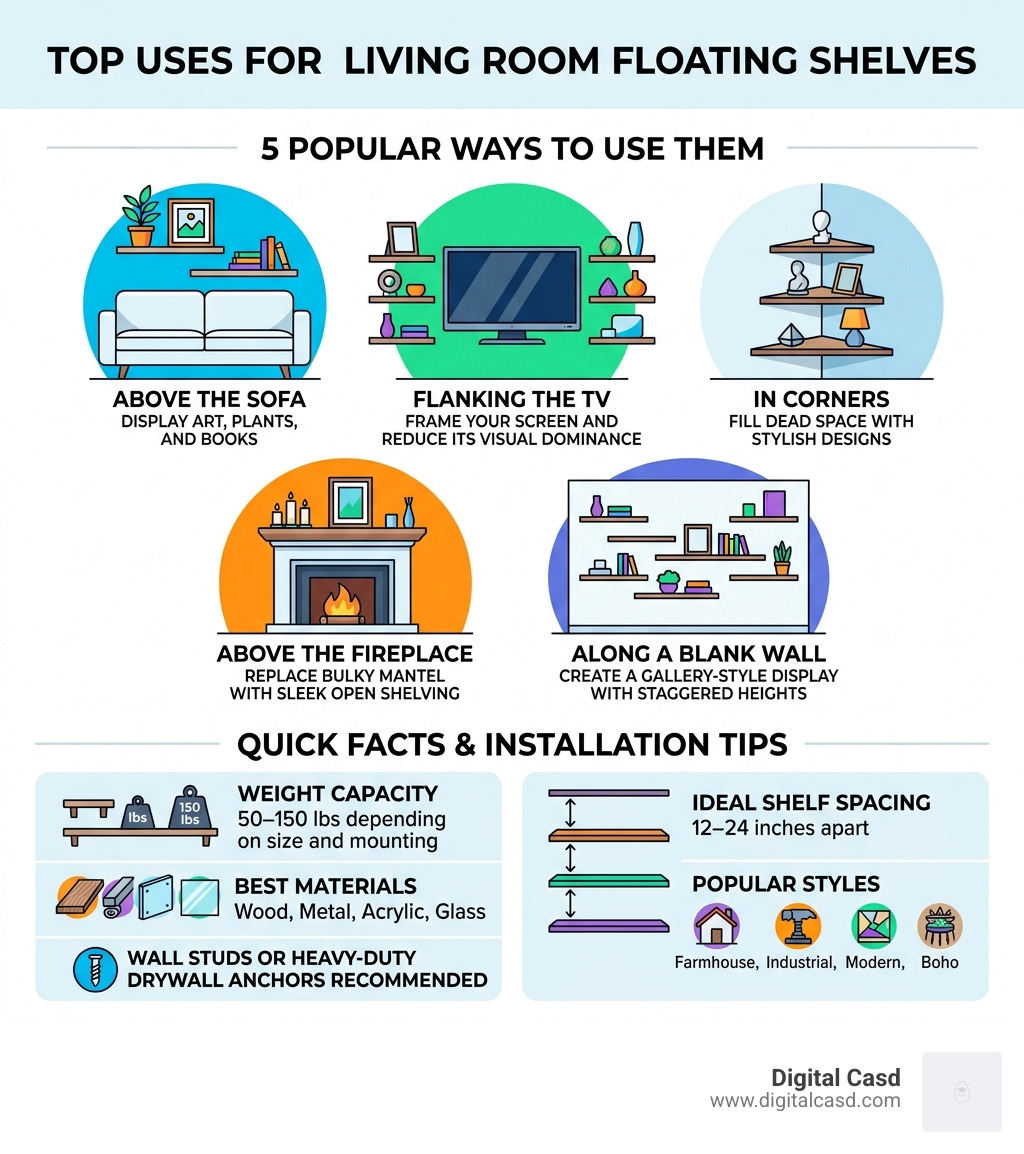
Here are the most popular ways to use them:
- Above the sofa — display art, plants, and books without taking up floor space
- Flanking the TV — frame your screen and reduce its visual dominance
- In corners — use triangular or hexagonal designs to fill dead space
- Above the fireplace — replace a bulky mantel with sleek open shelving
- Along a blank wall — create a gallery-style display with staggered heights
Quick facts:
| Feature | Detail |
|---|---|
| Weight capacity | 50–150 lbs depending on size and mounting |
| Best materials | Wood, metal, acrylic, glass |
| Ideal shelf spacing | 12–24 inches apart |
| Installation anchor | Wall studs or heavy-duty drywall anchors |
| Popular styles | Farmhouse, industrial, modern, boho |
If your living room feels cluttered and chaotic, you’re not alone. Most busy homes have one thing in common: untapped vertical space. Your walls are doing nothing while your floors and surfaces overflow.
Floating shelves fix this. They pull storage up, off the floor, and turn blank walls into intentional, styled displays. No bulky furniture. No visible hardware. Just clean lines and breathing room.
The best part? You don’t need a designer or a big budget. A well-placed shelf — the right size, the right material, styled with a few simple objects — can completely change how a room feels.
This guide gives you everything: the best styles, smart installation tips, and real creative inspiration to make it work in your space.
Why Living Room Floating Shelves are a Design Game-Changer
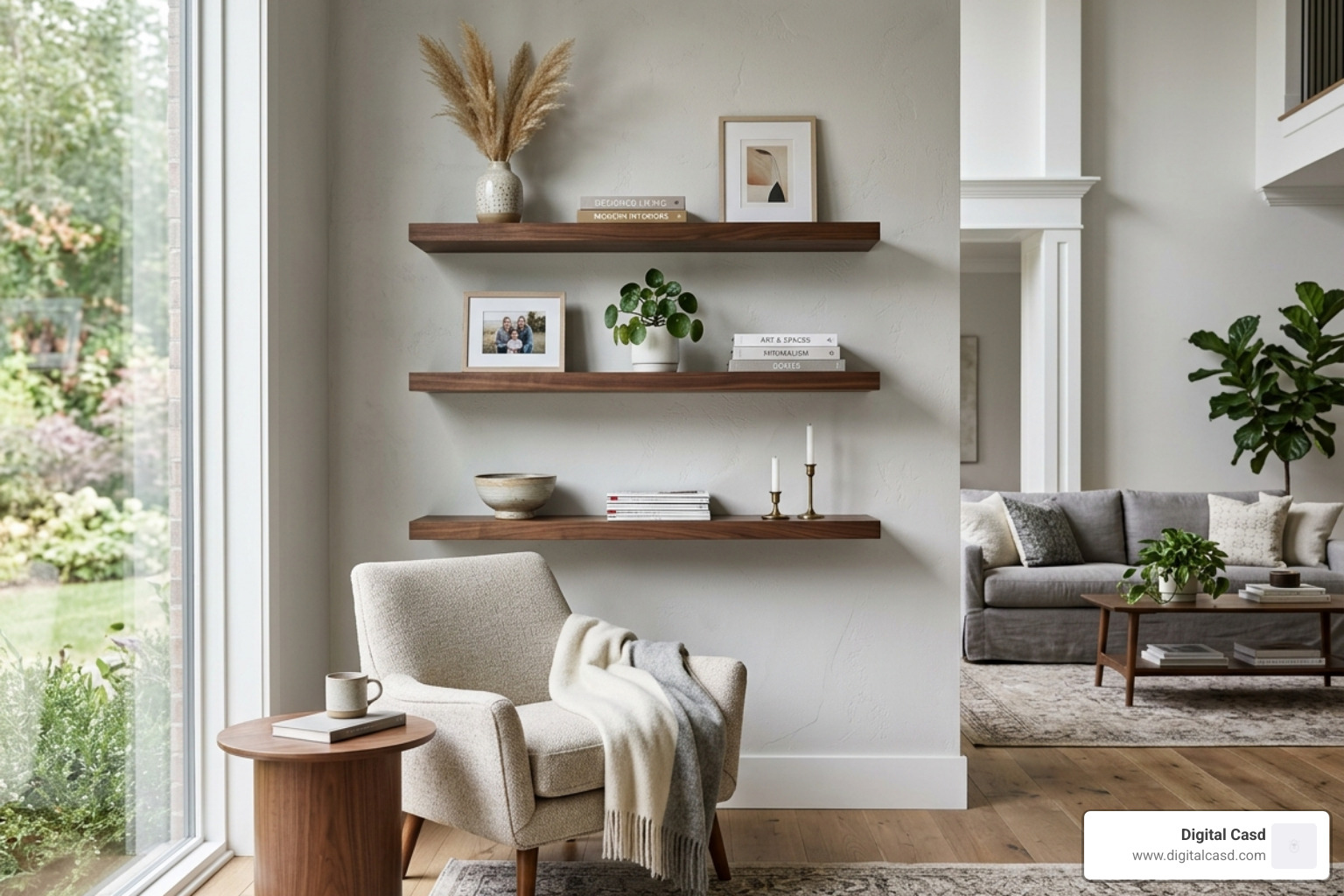
In our experience at Digital Casd, the most effective way to amplify focus in a home is to remove visual “noise.” Living room floating shelves are the ultimate tool for this. Because they lack visible brackets, they create a “skyline” look that feels light and airy rather than heavy and grounded like a traditional bookshelf.
These shelves offer a sleek deception—everyone knows there is a secret support system, but the illusion of levitation is what makes them so captivating. Beyond the magic trick, they are incredibly versatile:
- Space-Saving Saviors: They maximize vertical space without sacrificing precious floor area, making them ideal for small apartments or narrow living rooms.
- Aesthetic Chameleons: Whether you love the rugged look of rustic wood, the clean lines of modern minimalism, the “lived-in” feel of farmhouse style, or the edgy vibe of industrial charm, there is a floating shelf for you.
- Open Shelving Benefits: Unlike closed cabinets, open shelves allow you to showcase your personality. From travel treasures and family photos to your favorite book collection, these shelves turn your belongings into curated art.
Selecting the Right Materials and Layouts
Choosing the right shelf isn’t just about looks; it’s about matching the material to your lifestyle. We’ve found that the material you choose dictates both the durability and the “vibe” of your living room.
| Material | Pros | Cons | Best Style |
|---|---|---|---|
| Solid Wood | Extremely strong, durable, can be refinished. | Heavier, usually more expensive. | Farmhouse, Rustic, Traditional |
| Glass | Sleek, modern, doesn’t block light. | Fragile, shows dust and fingerprints easily. | Ultra-Modern, Glam |
| Metal | Very sturdy, industrial look, easy to clean. | Can be heavy; limited color options. | Industrial, Minimalist |
| Acrylic | “Invisible” look, lightweight, affordable. | Scratches easily, lower weight capacity. | Boho, Modern, Small Spaces |
When selecting wood, we highly recommend looking for FSC-certified materials. This ensures the timber comes from responsibly managed forests. Popular choices include Natural Elm, Walnut, and Oak. For a more budget-friendly approach, MDF with a high-quality melamine coating offers a scratch-resistant surface that mimics real wood grain beautifully.
Don’t forget to look at the corners! Corner shelf shapes like triangular, hexagonal, or curved designs can turn a “dead” corner into a functional library or a plant nook.
Common Mistakes When Choosing Living Room Floating Shelves
Even the most beautiful shelf can become a headache if you overlook the technical details. Avoid these common pitfalls:
- Ignoring Weight Limits: A shelf rated for 25 lbs will sag or fail if you load it with 50 lbs of heavy encyclopedias. Always check the manufacturer’s rating.
- Material Mismatch: Using fragile glass in a high-traffic area with kids or pets is a recipe for disaster.
- Incorrect Sizing: A tiny 12-inch shelf looks lost on a massive 15-foot wall. Measure your wall and aim for a size that feels proportional.
- Ignoring Wall Type: Installing a heavy-duty shelf into thin drywall without anchors or studs is the most common cause of “shelf-collapse.”
- Poor Load Distribution: Placing all your heavy items on one end of the shelf puts unnecessary stress on the bracket. Spread the weight evenly.
Expert Installation and Weight Capacity
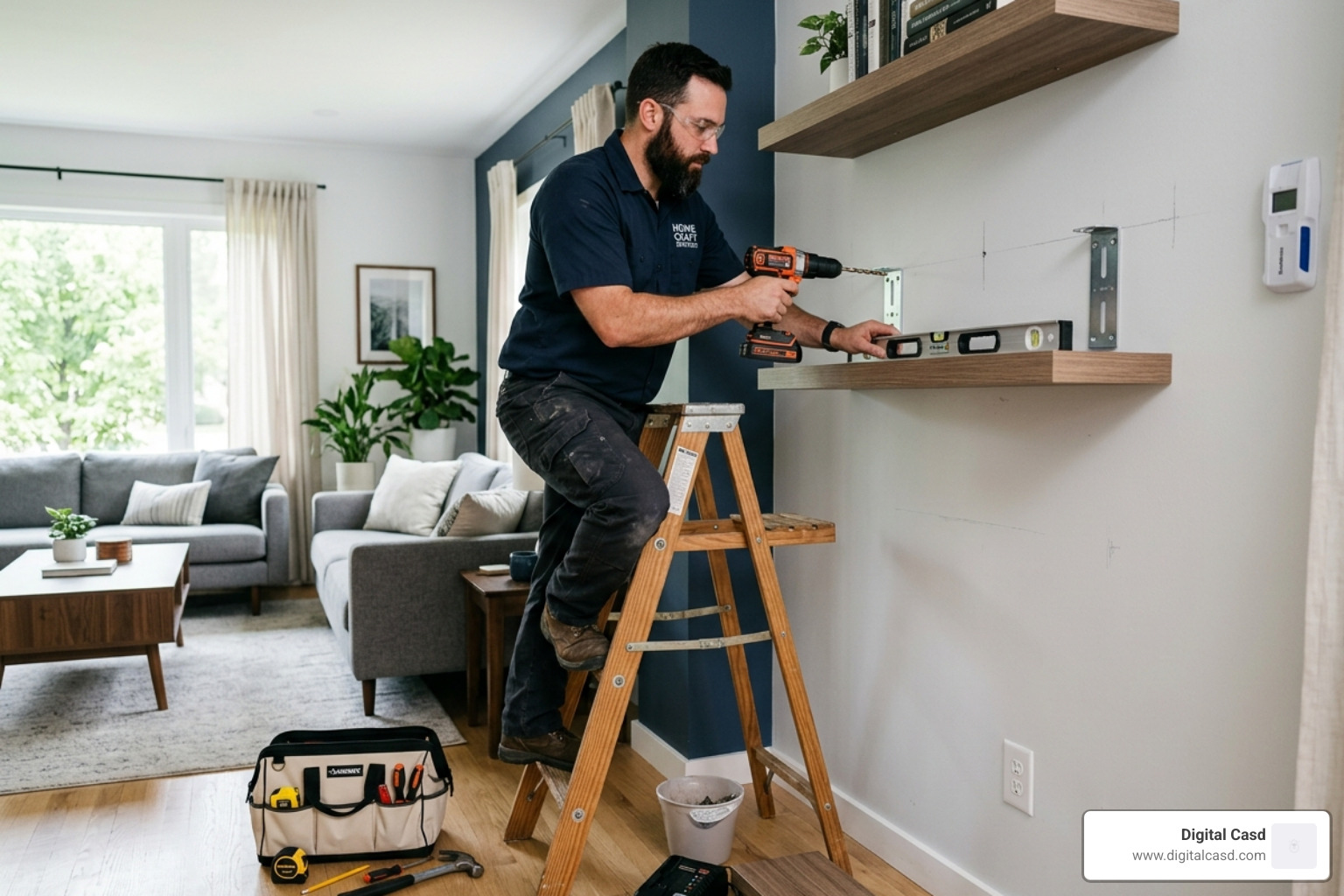
To ensure your living room floating shelves stay elegant and safe, you need the right tools. Installation is where the “magic” happens, but it requires precision.
Essential Installation Tool Kit:
- Stud Finder: Essential for finding the wood framing behind your drywall.
- Level: To ensure your shelf isn’t slanted (nothing ruins the look faster than a crooked shelf).
- Drill and Masonry Bits: For creating pilot holes in various wall types.
- Measuring Tape and Pencil: For marking your heights accurately.
- Heavy-duty Drywall Anchors: If you can’t hit a stud, use anchors rated for high weight (some are rated up to 236 lbs in 1/2-inch drywall).
Understanding Weight Capacity: As a general rule, a shelf attached to two wall studs can typically handle about 100 pounds (roughly 50 lbs per stud). However, the thickness of the shelf and the quality of the bracket matter. A 2-inch or 3-inch thick shelf often hides a more robust steel bracket, allowing for higher capacities.
Step-by-Step Guide to Installing Living Room Floating Shelves
- Measure and Mark: Decide on the height. Use your measuring tape and pencil to mark the wall.
- Find the Studs: Use your stud finder. Marking the studs is the most critical step for a secure mount.
- Level the Bracket: Place the hidden bracket against the wall. Use your level to make sure it’s perfectly horizontal.
- Drill Pilot Holes: Drill into the marks you made. If you aren’t hitting a stud, insert your heavy-duty anchors now.
- Secure the Bracket: Screw the bracket into the wall. Ensure it has a “strong handshake”—it should be tight and flush against the wall.
- Slide and Lock: Slide the hollow shelf onto the bracket arms. Most kits include small locking screws on the bottom to prevent the shelf from sliding off.
Creative Styling Inspiration for Every Home
Now for the fun part: making it look like a magazine cover! Living room floating shelves are a blank canvas for your creativity.
- Above the Couch: A long, singular shelf stretching across the length of your sofa creates a modern, grounded look. Use it for oversized art and leaning frames.
- Bookending the TV: Placing a trio of shelves on either side of your television makes the tech feel “built-in” and less like a black void on the wall.
- Layering Over Windows: For a bold look, install a shelf across a window. It’s a perfect spot for sun-loving plants or glassware that catches the light.
- Asymmetrical Balance: You don’t always need symmetry. Placing two shelves on the left and one higher up on the right can create a more interesting visual flow.
- Under-Shelf Lighting: For a touch of drama, add battery-operated LED strips under the shelf to highlight the items below.
Styling Living Room Floating Shelves for Visual Appeal
To achieve that professional look, follow these styling secrets:
- The Rule of Thirds: Group items in threes. Vary the heights—one tall item (a vase), one medium (a stack of books), and one small (a candle).
- Texture Layering: Mix materials. Pair a smooth ceramic pot with a rough-textured wooden bowl and a soft, trailing plant like a Pothos.
- Breathing Room: Don’t overcrowd. Leave “white space” on the shelf so the eye has a place to rest. This prevents the room from feeling cluttered.
- Color Palettes: Stick to a cohesive color story. If your room is neutral, use the shelves to add pops of green with plants or a specific accent color through decorative objects.
Frequently Asked Questions about Living Room Floating Shelves
How much weight can these shelves actually hold?
It depends entirely on the mounting. If you screw the bracket directly into wall studs, many high-quality shelves can hold between 50 and 150 lbs. If you are using drywall anchors without hitting a stud, the capacity drops significantly—usually to about 20–30 lbs. Always prioritize studs for heavy items like large books or electronics.
What is the ideal spacing between shelves?
For most living rooms, a 12-inch gap between shelves is standard. However, if you want a more “spacious” and accessible feel, or if you are displaying tall items like vases, increase that gap to 18 or 24 inches. Consider eye-level display for your most prized items.
How do I maintain wood shelves over time?
Maintenance is key to keeping that elegant look.
- Dusting: Use a soft, dry cloth weekly to prevent buildup.
- Humidity Control: Wood can warp in extreme humidity. Try to keep your living room at a stable temperature.
- Refinishing: If your solid wood shelves get scratched, a light sanding (220 grit) and a fresh coat of stain or polyurethane can make them look brand new.
- Weight Check: Every few months, check that the shelf is still flush against the wall. If it starts to lean, you may need to tighten the mounting screws.
Conclusion
At Digital Casd, we believe that a well-organized home is the foundation for a productive life. By utilizing living room floating shelves, you aren’t just adding storage; you are optimizing your environment. You’re clearing the floor, highlighting what matters most, and creating a space that feels intentional and streamlined.
Whether you choose a DIY plywood project or a handcrafted solid wood unit, the impact on your living room’s atmosphere will be immediate. Ready to take your space optimization to the next level?
Explore more about our home organization and design solutions at Digital Casd
